

Southern Blue Flag Iris
Iris virginica
- 4.5 in · $14.99 · 1 available
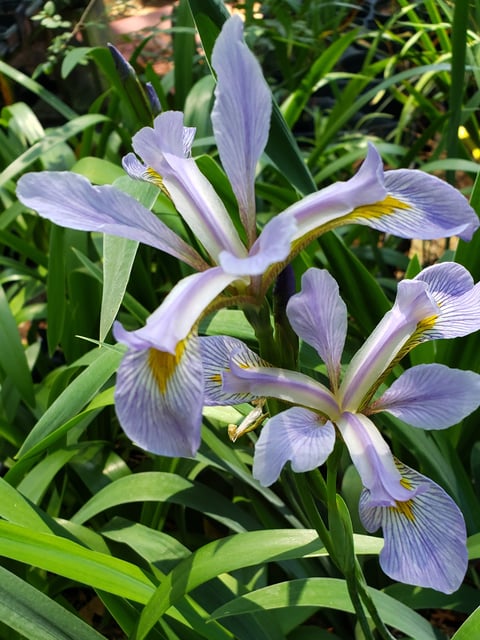
Light azure blue falls and standards are accented with darker veining and deep golden yellow bee guides. The Southern Blue Flag, Iris virginica tentatively, is a native of Louisiana but is not an actual Louisiana Iris as we had originally thought as the mother plant was shared with us without a name. We previously offered this as Light Blue Louisina Iris but it has kindly been tentatively identified for us by a Louisiana Iris grower and appears to fit the botanical descriptions. The Southern Blue Flag is just as vigorous and hardy as the Louisiana Irises and will do well under similarly moist to wet to average moist soils in a full to mostly sunny site for optimum vigor and flowering. It can be set in water gardens where the container is just below the water's surface. And can also be enjoyed in rain gardens, moist ditches, and seems to fine under average moist conditions once fully established.
These easy to grow perennials are happy to grow under average garden conditions provided you understand their growth habits. Louisiana Irises are summer dormant and fall, winter, and spring growing. They are accustomed to a short dry period during the dog days of August and September here in Louisiana in the low areas. October averages to be our wettest month, with consistent rains throughout fall, winter, and spring when flowering generally occurs. Consider fertilizing them if needed during these growing periods if soils are poor. The parents of many of these species grow in the bayous where the sediment and nutrients from the meltwater of northern spring rains is deposited in these drainages as much of the central and northern US drains into Louisiana via the Red, Mississippi, and the many other water ways that drain into them. And so in the spring time they naturally expect an influx of new nutrients to help them produce their beautiful flowers. This is followed by fruit production and something of a pause in top growth with rhizome development. As the fruits become fully ripened spring foliage begins to yellow and fade away as the roots absorb all the nutrients stored in them to develop the buds of next spring. At this point the ugly foliage can be pruned away but may be best left to protect and shade the young foliage during the hottest parts of summer.
- Zones
- 5, 6, 7, 8, 9
- Sun
- Full sun, Mostly sunny, Part shade
- Size
- 16-24"H, space at about 12" apart
- Bloom
- Spring
- Soil
- Moist, wet, submerged, to average moist, moderately fertile soils.
Family: Iridaceae
Find it in: Groundcovers, Cut Flowers, Deer Resistant Plants, Heirloom Plants, Iris, Louisiana Native Plants, Perennials, Perennials by Size Class, Plants by Flower Color, Plants for Bogs & Wet Areas