

Pawpaw
Asimina triloba
- 4.5 in · $19.99
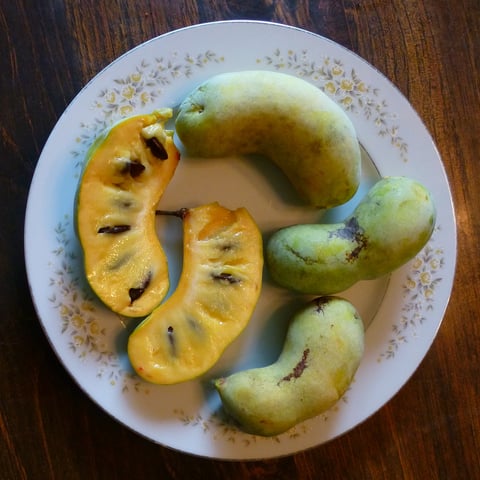
3-5" green-yellow fruit with banana custard-like flavor, some say they are best after being frozen. Produces fragrant purple flowers in spring. A small native, normally understory tree, and is the caterpillar host plant of the Zebra Swallowtail Butterfly. Seedling grown. Plant two different varieties or seedlings for pollination.
The Pawpaw makes a beautiful small deciduous tree with a generally pyramidal form when grown in full sun. The large tropical looking foliage turns a golden yellow in fall. Allow the green fruit to become soft before eating, the softer the better by some accounts. They may be picked once they are to full size and allowed to ripen indoors out of reach of hungry raccoons and opossums.
Pawpaws are dioecious, meaning that both male and female flower parts are produced on the same plant, so every tree has the potential to produce fruit.Pawpaws are also self-incompatible and so require cross-pollinization (pollen from a genetically different Pawpaw tree) in order to produce fruit. Our trees are all seedling grown, and so as long as you have at least two of them fruit production should occur under normal circumstances once the trees are mature (about 5-7 years of age). Two root suckers from the same tree or two of the same grafted cultivar will likely not produce fruit as they are genetically identical.
- Zones
- 6, 7, 8
- Sun
- Full sun, Part sun, morning sun in S regions
- Size
- 20'H x 20'W
- Bloom
- Late winter and early spring. Earlier in warmer winter regions.
- Soil
- Average moist, fertile, average to well-drained soils.
Family: Annonaceae
Find it in: Fruits & Herbs, Butterfly Plants, Deer Resistant Plants, Great Plant Picks for the Pacific Northwest, Heirloom Plants, Missouri Botanic Gardens Plants of Merit, Native Plants, Plants by Flower Color, Shrubs & Trees, Shrubs by Size Class, Songbird Plants