

Partridgeberry
Mitchella repens
- 3.5 in · $14.99 · 1 available
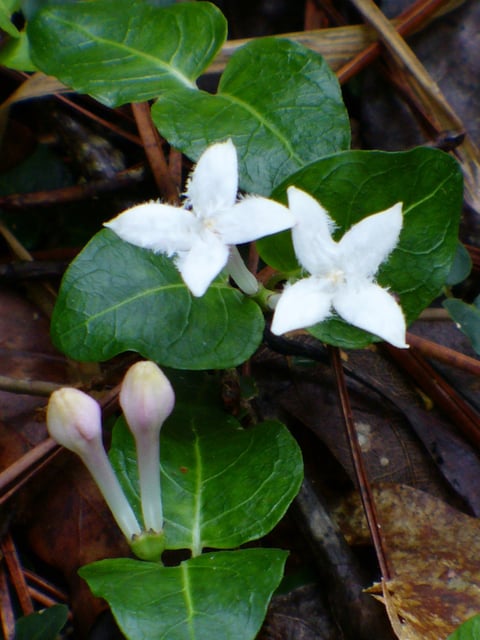
In early spring to early summer, pairs of starry, four-petaled, tubular fuzzy white flowers are produced atop the deep green foliage and are followed by 1/4-3/8" diameter, glossy, bright red berries. The flowers are a standout against the deep green foliage and are likely to attract pollinating moths, like Sphinx and Hummingbird Moths, as well as smaller pollinators like bees and potentially butterflies. The fruit is consumed by a variety of wildlife like Quail, Dove, Wild Turkey, songbirds, and small mammals. The Partridgeberry or Twinberry, Mitchella repens, is a low growing, slow-ish growing and thus non-aggressive, shade tolerant, native, evergreen, woody groundcover native to all states east of the Mississippi River and those abutting it, as far west as East Texas, as far south as South-Central Florida, and as far north as Eastern Minnesota, Maine, and into Canada. We normally see it on average moist to moist, often sandy soils and in shaded to partly shade areas where it has minimal competition. The Partridgeberry is considered tolerant of periodically dry-ish shade once well established. Provide a shaded, average moist, acidic, average to well-drained soil that is rich in organic matter for optimum vigor and flowering. It will likely do best with a mulch such as pine needles, aka. pinestraw.
Mitchella repens has long been one of my favorite plants to come across, maybe because it is always an indicator of a quality habitat, or maybe just because of its uniqueness and ease of identification. The Partridgeberry or, in my preference, Twinberry because it actually takes two flowers to make one full fruit, another unique and interesting quality of this member of the Coffee or Gardenia family or the Rubiaceae. It can make a solid mat of its glossy, deep green rounded to ovate foliage that is commonly accented by a white, cream, to near yellow midvein that provides additional interest. It doesn't seem to grow vigorously enough to be a typical groundcover and seems to do best where it has minimal competition and a quality soil.
- Zones
- 3, 4, 5, 6, 7, 8, 9
- Sun
- Early morning sun, Filtered shade, Bright shade, Shade, Part shade
- Size
- 1-3"H x 12-18"+W
- Bloom
- Early spring to early summer depending on your zone, earlier in warmer climates and later in colder ones.
- Soil
- Average moist to moist, typically sandy, average to well-drained, acidic soils often in areas with an organic mulch. Somewhat drought resistant once fully established.
Family: Rubiaceae
Find it in: Groundcovers, Bee Plants, Butterfly Plants, Deer Resistant Plants, Louisiana Native Plants, Moon Moth Garden Plants, Native Plants, Perennials by Size Class, Plants by Flower Color, Plants by Fruit Color, Plants for Bogs & Wet Areas, Shade Tolerant Plants, Songbird Plants, Rare & Unusual Plants