

Pam Puryear's Pink Turk's Cap
Malvaviscus arboreus var. drummondii 'Pam Puryear's Pink'
- 3.5 in · $12.99
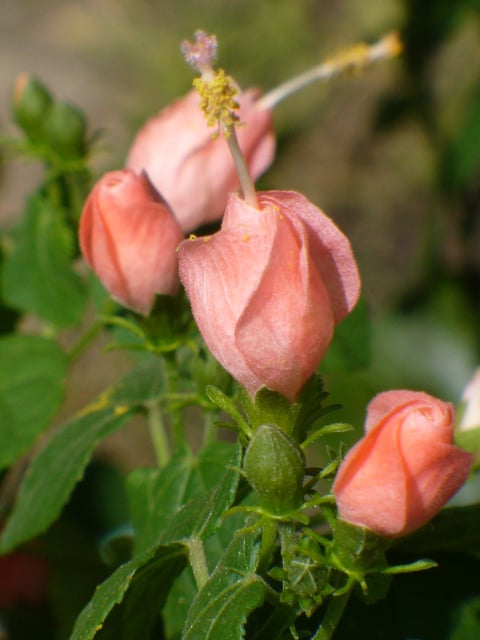
1", sleepy, rose to coral-pink flowers are borne from late spring to fall on this vigorous perennial. Tough, easy, and great for hummingbirds and occasional butterflies. Pam Puryear's Pink Turkscap is a still relatively new introduction from the great Texas plantsman Greg Grant and was named after his friend and the 'Rose Rustler' founder Pam Puryear. This Turk's Cap has won the prestigious Lynn Lowery Award from the Native Plant Society of Texas! Provide a full to mostly sunny site in an average moist, fertile, average to well-drained soil for optimum health and flowering.
Dr. Allen says " Butterflies drink lots of nectar from these plants and I find the pink to have smaller leaves and to be in flower later in the year and thus are used by migrating monarchs. The caterpillars of the io moth (Automeris io) and Straight Lined Mallow Moth (Bagisara rectifascia) are reported to use these plants."
For more on Greg's introductions from the SFA Gardens website click the "More Info" link below. In the northern portion of their range the Turk's Caps are die-back perennials that freeze nearly to the ground in winter and return vigorously in spring. In mild winter climates they can get fairly large but are certainly amenable to pruning. Easy to grow, moderately drought tolerant once well-established, and exceptionally free-flowering.
Turk's Cap are native to portions of the southern US although they have been passed around so much in southern gardens it may be hard to say just where anymore. Either way, these are excellent, hardy, and long-lived perennials with immense flower power. Shade tolerant, deer resistant, moderately salt tolerant, and moderately drought resistant once they are well-established and few plants can compete for adaptability. Provide your Turk's Caps with a well-draining, moderately fertile soil, preferably with at least 4-6 hours a day of direct sunlight for the best results. The more sunlight they get the fuller the plants tend to be and the more flowers they generally produce. The only real maintenance for Turk's Cap is to prune away the dead stems in winter where they freeze to near the ground and to mulch them as needed. Where they don't freeze back, a hard late-winter pruning will act as a renewal and may help to rid them of overwintering pests as well as to keep them full and in bounds (if you can stand to remove the flower buds).
Turk's Cap is well-loved and so is known by a variety of common names including: Turk's Turban, Ladie's Eardrops, Scotchman's Purse, Wild Fuchsia,Drummond Wax-Mallow, Texas Mallow, Mexican Apple, Red Mallow, May Apple, Wild Turk's Cap, Bleeding Heart, Sleeping Hibiscus, Sleepy Mallow, Cardinal's Hat, Manzanilla, Turkscap, and Wax Mallow.
- Zones
- 7B, 8, 9, 10, 11
- Sun
- Full sun, Mostly sunny, Part shade, Part sun
- Size
- 3-5'H x 3-5'W
- Bloom
- Late spring or early summer until frost to potentially year-round in frost free climates.
- Soil
- Average moist, moderately fertile soils with good drainage. Moderate drought tolerance once well-established. Adaptable to soil types. An organic mulch is recommended in zones 8-9.
Family: Malvaceae
Find it in: Turks Cap, Butterfly Plants, Greg Grant Introductions, Hummingbird Plants, Perennials, Perennials by Size Class, Plants by Flower Color, Texas Superstar® Plants, Tropical Plants, Drought Resistant Plants