

Margarita Carolina Yellow Jessamine
Gelsemium sempervirens 'Margarita'
- 4.5 in · $14.99
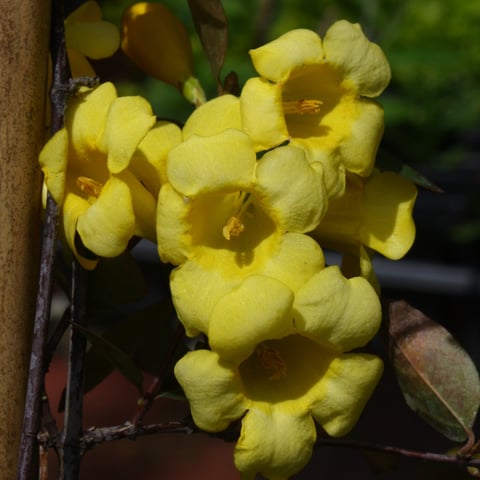
Masses of primrose yellow, 1" long trumpets herald the coming of spring and have a strong Jasmine-like fragrance that is produced in early evening and at night suggesting that they are pollinated by hummingbird or sphinx moths as well as by native bees, butterflies, and hummingbirds. *It is not a suitable nectar plant for honeybees. Margarita Carolina Yellow Jessamine, with larger flowers, more flowers, and improved cold hardiness over the species surviving -25°F at North Creek Nurseries in Landenberg, PA. This a native, twining, evergreen to semi-evergreen vine with glossy, dark green, narrow foliage that can climb up to 20' high but is just as happy on a 6' fence or other sturdy support. The species, Gelsemium sempervirens, is native to the southeastern US, but, Margarita was selected by Don Jacobs of Eco Gardens in Decatur, Georgia. Provide Carolina Yellow Jasmine with a full sun to mostly sunny site in an average to well-drained, fertile soil for optimum growth and to maximize flowering. Although, it is shade tolerant it doesn't flower as profusely. Tough and easy as well as drought, deer, and rabbit resistant. Its fragrance is enough to stop you in your tracks on an evening stroll! A Pennsylvania Horticulture Society Gold Medal Award Winner!
Songbirds will often use the dense canopy of wiry vines of the Carolina Yellow Jasmine for nesting. Jessamine is an older English equivalent of and is also the French word for Jasmine. This plant is the state flower of South Carolina. *Note: Its nectar is considered toxic to honeybees and honey made from the flowers may be toxic to humans and animals. Interestingly, the strychnine-like toxins are considered to provide some protection from disease for native bee species, like Mason bees (Osmia spp.), even in what is considered to be toxic doses. See the Lady Bird Johnson's Mr. Smarty Plants response for more detailed info on the plant's toxicity at: https://www.wildflower.org/expert/show.php?id=10689
- Zones
- 6, 7, 8, 9, 10, 11
- Sun
- Full sun, Mostly sunny, Part shade, Part sun
- Size
- 10-20'H+ but easily maintained on a sturdy 6'H fence or 8-12'H post
- Bloom
- Late winter and early spring in zone 8B to midspring in colder climates.
- Soil
- Average moist, average to well-drained, fertile soils. Adaptable to soil types.
Family: Gelsemiaceae
Find it in: Vines and Vine-like Plants, Bee Plants, Butterfly Plants, Deer Resistant Plants, Fragrant Plants, Hummingbird Plants, Louisiana Native Plants, Moon Moth Garden Plants, Native Plants, Plants by Flower Color, Salt Tolerant Plants, Songbird Plants, Drought Resistant Plants