

Hairy Sunflower
Helianthus hirsutus
- 3.5 in · $12.99
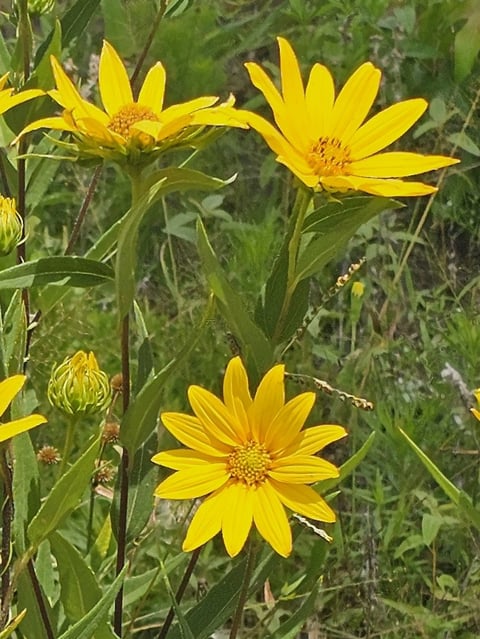
2-3" wide sunflowers with golden yellow to primrose yellow ray petals and yellow disc flowers are produced in summer to fall singly and in few-flowered clusters atop short sturdy stems attracting bees, butterflies, and other garden beneficials. The Hairy Sunflower, Helianthus hirsutus, is one of the smaller growing Sunflower species whose sturdy stems are adorned with opposite, lanceolate, rough feeling, deep green foliage and the leaf pairs sit at 90° to those above or below. In its native habitat, this is a 2-4' high, rhizomatous, colonizing, herbaceous, winter deciduous perennial that is typically found locally in dryish, sandy to loamy, well-drained soils in the Pineywoods but is found throughout much of the central and eastern US into Canada and northern Mexico. In rich fertile soils it is reported to grow as high as 5-7' and it may be at its best where it can be allowed to naturalize as in meadows, prairies, forest edges, and roadside plantings. The Hairy Sunflower is utilized as a caterpillar food source for the Painted Lady, Gorgone and Silvery Checkerspot butterflies, as well as some moth species. The flowers are an important nectar and pollen source for a variety of native bee species including both long and short-tongued bees. The ripened seeds are utilized by a variety of birds including Quail as well as small mammals.
We have seen the Hairy Sunflower growing happily even in filtered sunlight but it will likely be most vigorous and floriferous where it receives at least 4 hours of direct sunlight. Of all of the native sunflowers this one has long been on our list to grow due to its generally smaller size, at least when it is grown in lean sandy mineral soils.
- Zones
- 3, 4, 5, 6, 7, 8, 9
- Sun
- Full sun, Mostly sunny, Part shade, Part sun
- Size
- 2-4'(-7')H and slowly spreading
- Bloom
- Late spring to fall. Appears to begin flowering earlier where winters are warmer and later in colder winter regions.
- Soil
- Well-drained, dry to average moist, deep sands to sandy loams are typical but plants are somewhat adaptable. Moderately drought resistant once fully established.
Family: Asteraceae
Find it in: Perennials, Bee Plants, Butterfly Plants, Deer Resistant Plants, Louisiana Native Plants, Native Plants, Perennials by Size Class, Plants by Flower Color, Salt Tolerant Plants, Shade Tolerant Plants, Songbird Plants, Drought Resistant Plants