
Golden Spangles Variegated Camellia
Camellia × williamsii 'Golden Spangles'
- 4.5 in · $19.99
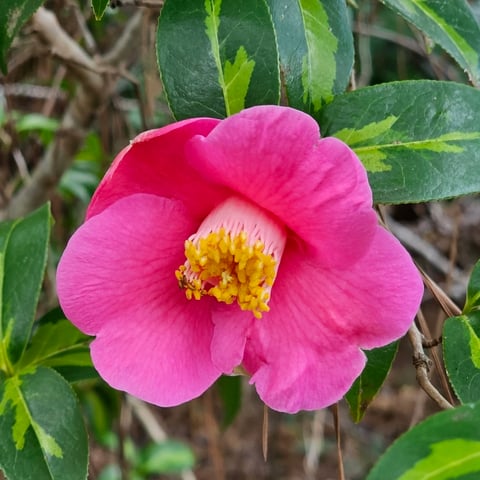
Bright cherry pink, medium-sized, trumpet-shaped, single to semi-double flowers with a boss of gold-tipped white stamens are held against a nicely contrasting foil of deep green and gold foliage. Flowering occurs in mid to late season, January to March, attracting bees and other pollinators on warmer days. Golden Spangles Camellia, a Camellia x williamsii hybrid, is a medium to large, evergreen shrub with a slow to moderate rate of growth and an upright to rounded, semi-open habit growing to about 6-8'H x 3-4'W. This Camellia is truly a shrub for all seasons with its deep dark green, medium to fine-textured, glossy, Sasanqua-like foliage that is consistently heavily variegated with gold, yellow, and chartreuse along the central veins, a rarely seen trait among Camellias. Use this medium to large evergreen shrub as a specimen in the garden and landscape or as a container plant. Camellias prefer a moist to average moist, well-drained, loamy to sandy, acidic soil with a deep organic mulch. See our Camellia Growing Guide for in-depth planting and care instructions.
Golden Spangles is known as Jinye Feidie in Chinese and is generally considered to be a sport of Mary Christian.
Camellias are the rose of winter in southern gardens, with their colorful blossoms held against deep rich green glossy foliage on a naturally upright to rounded evergreen shrub. Pick the flowers and float them in a bowl of water to bring their beauty indoors. Camellias prefer an acidic, humus rich soil with an organic mulch and average moisture. Once well-established they need little additional care and will continue to perform for years to come. Most Camellias do best where they get light shade or morning sun and the light filtered shade of pines seems to be perfect. For more information about growing Camellias see our Camellia Growing Guide or any of the excellent resources below:
Camellias Brighten the Winter Landscape- Get It Growing by Dan Gill with LSU Agcenter
Camellia Culture for Home Gardeners- UGA Extension by James T Midcap et al.
These large evergreen shrubs make easy container plants provided they get regular moisture and a good quality, well-draining, acidic potting soil. We prefer well aged, decomposed bark based mixes over peat based mixes and usually add a little extra sand or hadite to ensure good drainage. Container grown Camellias can suffer root damage if the soil is allowed to freeze so you will want to consider protecting them during any extended periods below freezing. They can usually tolerate overnight temperatures that dip as low as 20-25oF for short periods in 8" or larger containers. When grown or overwintered indoors provide them with plenty of cool direct sunlight. Preferably a few hours in the morning, in the late afternoon, or filtered light, like through a pine, is fine as well with high light conditions the remainder of the day whenever possible. For more on growing Camellias as container plants see the following article by Dan Gill with LSU Agcenter: Camellias are Outstanding in Containers.
- Zones
- 7, 8, 9
- Sun
- Morning sun, Part shade, Part sun, Filtered shade, Light shade
- Size
- 6-8'H x 3-4'W
- Bloom
- Mid to Late season - January to March
- Soil
- Average moist, fertile, humus rich, acidic soils with good drainage and a deep organic mulch.
Family: Theaceae
Find it in: Camellias & Sasanquas, Bee Plants, Cut Flowers, Deer Resistant Plants, Plants by Flower Color, Plants by Foliage Color, Shade Tolerant Plants, Shrubs & Trees, Shrubs by Size Class, Rare & Unusual Plants