

Daniel Weeks Ginger
Hedychium 'Daniel Weeks'
- 4.5 in · $17.99 · 30 available
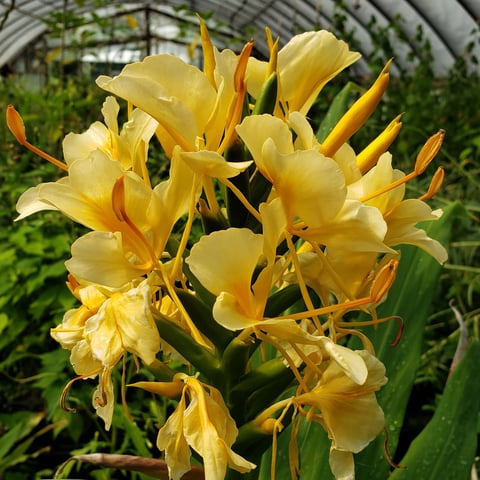
Known for its intense Honeysuckle-like fragrance that is most pronounced in the evening, Daniel Weeks Ginger produces large dense spikes of of large butterfly-like flowers that are a light creamy orange at the edges deepening to dark golden-orange in the center. This is a vigorous clump forming ginger with sturdy upright stems adorned with tropical foliage that starts flowering in late spring to early summer and can continue until fall. Its compact clump forming upright habit and excellent flower power lend this hybrid Hedychium to use in containers as well as in the garden and landscape. Daniel Weeks Ginger is easy, reliable, and proven to be hardy enough for zone 7. Provide a moist, well-drained, fertile soil and a minimum of 4 hours of direct sunlight for optimum growth and flowering.
Known for its intense Honeysuckle-like fragrance, Daniel Weeks Ginger produces large dense spikes of of large butterfly-like flowers that are a light creamy orange at the edges deepening to dark golden-orange in the center. This is a vigorous clump forming ginger with sturdy upright stems adorned with tropical foliage that starts flowering in late spring to early summer and can continue until fall. Its compact clump forming upright habit and excellent flower power lend this hybrid Hedychium to use in containers as well as in the garden and landscape. Daniel Weeks Ginger is easy, reliable, and proven to be hardy enough for zone 7. Provide a moist, well-drained, fertile soil and a minimum of 4 hours of direct sunlight for optimum growth and flowering.
Gingers that are night or evening fragrant are sure to attract the hummingbird-like Sphinx moths, highly important pollinators, to the Moon Moth Garden and will likely attract butterflies and hummingbirds during the day.
Note*:The Hedychium Gingers can tolerate full sun in areas with cooler summers but in hot summer climates, like the Deep South where temperatures are commonly in the 90-100°Fs on a daily basis, sites with cool sunlight, like early in the day, like on the east side of a structure, and very late in the afternoon along with filtered, dappled, or bright shade and totaling about 4-6 hours of sunlight will help to ensure they have the best looking foliage and good flowering potential. Some types of Hedychiums tend to be more shade tolerant than others, like the White Butterfly Ginger, and will generally still flower well. These gingers prefer a rich fertile, moist to average moist soil with good drainage and preferably high in organic matter. In drier locations, but it will be beneficial for any planting for that matter, consider applying a breathable organic mulch, like pine straw or pine needles, to help keep moisture more evenly consistent during the growing season, as it breaks down it will help improve the soil, keeps weeds down, and it will help to protect rhizomes during winter. Mulch is highly recommended in zones 7-8 especially with new plantings. Where not hardy, they can be enjoyed as medium to large container specimens to add a little tropical flare to sunny settings. Gingers make good cut flowers, are deer and rabbit resistant, and multiply readily but not invasively.
For an excellent article on adding gingers and other tropicals to your Louisiana garden (or other south central or southeastern garden) see "Louisiana Gardeners Enjoy a Taste of the Tropics" by Dan Gill, LSU AgCenter Horticulturist. From Norman Winter, MSU Cares Horticulturist (at time of writing), see "Spice Up Landscape with Showy Gingers".
- Zones
- 7, 8, 9, 10, 11
- Sun
- Morning sun, Part shade, Part sun, *Mostly sunny, *Full sun
- Size
- 4-6'H space at 1-2' apart
- Bloom
- Late spring through fall on well tended, established plantings.
- Soil
- Moist to average moist, rich fertile soils with good drainage. An organic mulch is highly recommended and is quite beneficial.
Family: Zingiberaceae
Find it in: Gingers, Cut Flowers, Fragrant Plants, Hummingbird Plants, Moon Moth Garden Plants, Perennials, Perennials by Size Class, Plants by Flower Color, Shade Tolerant Plants, Tropical Plants, Drought Resistant Plants