
Dallas Red Lantana
Lantana × 'Dallas Red'
- 3.5 in · $12.99 · 12 available
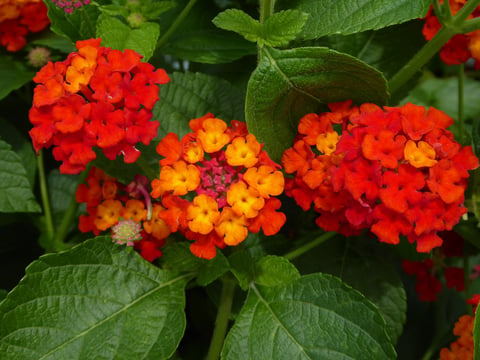
The flower clusters open a deep golden orange, deepen through fiery orange-red, and finally mature to a brilliant deep red attracting a variety of butterflies, bees, and the occasional hummingbird. Dallas Red Lantana has long been one of the best large growing red Lantanas on the market and is a vigorous plant growing to about 3' high and 4-5' wide by the end of the growing season in zone 8B and may become larger in areas with milder winters. It seem to produce few seeds and so it spends the majority of its energy on flowering. Provide a full to mostly sunny site in an average to well-drained, average moist, fertile soil for optimum vigor and flowering.
We have Dallas Red Lantana in our own gardens that has taken 8 and 12°F winters and has readily returned each spring. One suggestion that we have heard, is that if you are growing Lantana as a die-back perennial in zones 8-9, wait until spring to remove the previous year's growth as that may provide some protection for tender young stems in the event that we get a hard late season frost or light freeze. An organic, breatheable mulch, like pine needles or pine bark, can also provide additional protection for overwintering crowns and may be most critical for first and second year plants.
Lantana are only second to Porterweed in our garden for their ability to attract butterflies! Lantana are loaded with flower power and normally flower continuously from late spring to frost. This durable and reliable perennial is moderately drought tolerant, deer resistant, salt tolerant, and is generally pest free. For the best results provide your Lantana with an average to well draining soil with average moisture in an area that gets 6 hours or more of sun per day. They can be cut back to near ground level in winter. Provide a protective mulch in winter where hardiness is questionable.
- Zones
- 8, 9, 10, 11, 12
- Sun
- Full sun, Mostly sunny, Part shade, Part sun
- Size
- 3-4'H x 3-5'W
- Bloom
- Spring to fall to year-round under warm tropical conditions.
- Soil
- Average moist, well-drained, fertile soils. Somewhat drought resistant once well-established. A breathable, preferably organic, winter mulch is recommended in zones 8-9.
Family: Verbenaceae
Find it in: Groundcovers, Bee Plants, Butterfly Plants, Deer Resistant Plants, Hummingbird Plants, Lantanas, Perennials, Perennials by Size Class, Plants by Flower Color, Salt Tolerant Plants, Drought Resistant Plants